

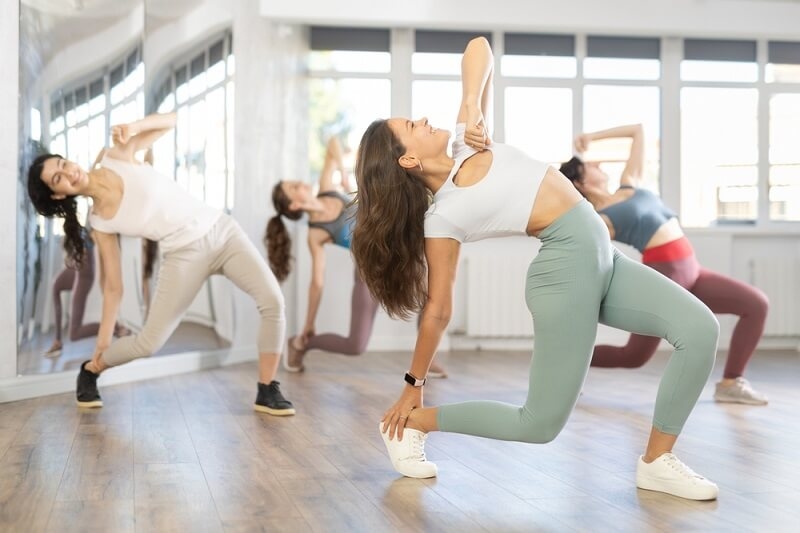
Stretching for dancers is often treated like a checklist. Stretch before class, stretch after rehearsal, stretch harder if flexibility is not improving. That mindset causes more problems than it solves.
Stretching should help dancers move better, not just look flexible. When stretching is rushed, forced, or done without purpose, it can lead to tight hips, sore backs, and repeat injuries. This article explains how stretching for dancers should actually work, which dance stretching exercises are worth your time, and how flexibility training for dancers fits into real training schedules.
The focus here is simple. Stretch in a way that supports your dancing and keeps your body usable long term.
Dance asks the body to move in ways most people never do. High extensions, deep pliés, jumps, floor work, and long rehearsals all put stress on muscles and joints. Without regular stretching, those tissues tighten and movement starts to feel restricted.
Stretching for dancers helps with:
Stretching alone does not fix poor technique or weak muscles, but it supports both. Dancers who skip stretching often feel heavy, tight, and sore even when training volume is reasonable.
Flexibility training for dancers does not mean pushing until something gives. Real flexibility comes from slow, repeated exposure to range, paired with control.
Important things to understand:
Flexibility training for dancers should make movement feel easier, not leave you feeling unstable or sore the next day.
Dance warm up stretches are not the same as deep stretching. Their job is to prepare the body to move, not to increase range.
Skipping dance warm up stretches is one of the most common causes of early class injuries, especially during cold weather or morning rehearsals.
Good dance warm up stretches include:
These movements increase circulation and wake up the nervous system. Once the body feels warm, movement feels smoother and safer.
Must Read: Dance Warm-Up Exercises for Safe Body Prep Each Session
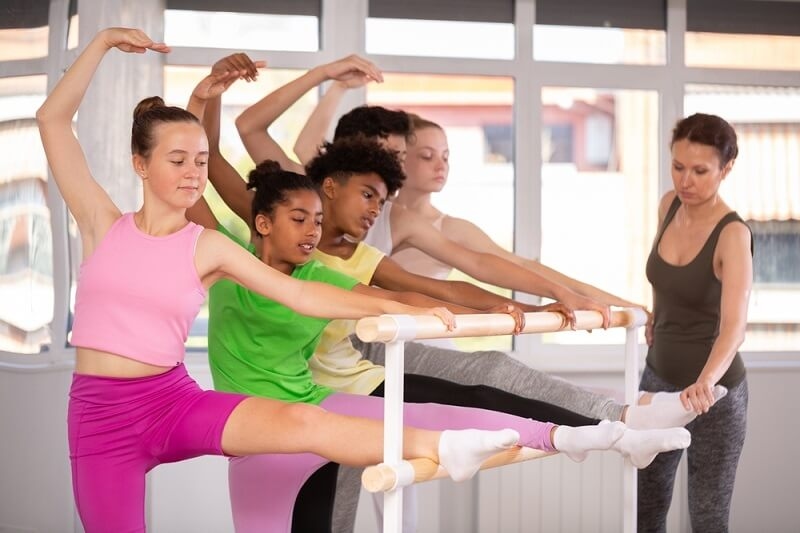
There are hundreds of stretches online, but dancers do not need complicated routines. The best stretches for dancers target areas that handle the most workload.
Tight hamstrings limit extensions and pull on the lower back.
Hip flexors work constantly during dancing and tighten easily.
These muscles support side extensions and floor transitions.
Strong, mobile calves support jumps and landings.
These dance stretching exercises are simple but effective when done consistently.
Turnout issues are often blamed on tight hips, but poor control is usually the bigger problem. Stretching for turnout should never cause knee or ankle discomfort.
Safer turnout focused dance stretching exercises include:
Flexibility training for dancers should never force turnout. If the stretch feels unstable or painful, alignment needs adjustment.
Static stretching involves holding a stretch for a set amount of time. For dancers, this type of stretching works best after class or rehearsal.
Benefits include:
Most static stretches should be held for 20 to 60 seconds. Longer is not always better. Stretching should leave muscles feeling relaxed, not exhausted.
Dancer injury prevention is not about avoiding movement. It is about preparing the body properly and respecting limits.
Common injury areas include:
Stretching for dancers supports dancer injury prevention when it is balanced and consistent. Neglecting warm ups and overstretching worn-out muscles raises the risk of getting injured.
Instead of taking the place of strength or rest, stretching should back up training.
Many dancers stretch daily but still feel tight because of how they stretch.
Problem habits include:
Fixing these habits often improves flexibility without adding more stretching time.
Discover More: Basic Dance Techniques That Build Strong Skills Step by Step
There is no single schedule that works for everyone, but general patterns help.
Most dancers benefit from:
Consistency matters more than intensity. Short sessions done regularly lead to better results.
Different styles place stress on different areas, but stretching for dancers applies across all forms.
Dance stretching exercises should reflect training demands without overloading the body.
A realistic routine includes:
Stretching for dancers should fit into training, not feel like a separate burden.
Don’t Miss: Self Taught Dance Tips For Confident Moves And Flow On Stage
Stretching for dancers is about staying functional, not chasing extreme flexibility. The best stretches for dancers are the ones that allow you to train consistently without pain or setbacks.
If stretched daily, dance stretching exercises, flexibility training for dancers, and dance warm-up stretches can gradually support the enhancement of movement quality and the reduction of injuries among dancers.
Stretch with intention. The results last longer.
Most static stretches are effective when held for 20 to 60 seconds with steady breathing and good alignment.
Yes. Dance warm up stretches prepare muscles and joints and reduce injury risk, even during short sessions.
No. Stretching helps with dancer injury prevention, but strength training, technique, rest, and recovery are equally important.
This content was created by AI