

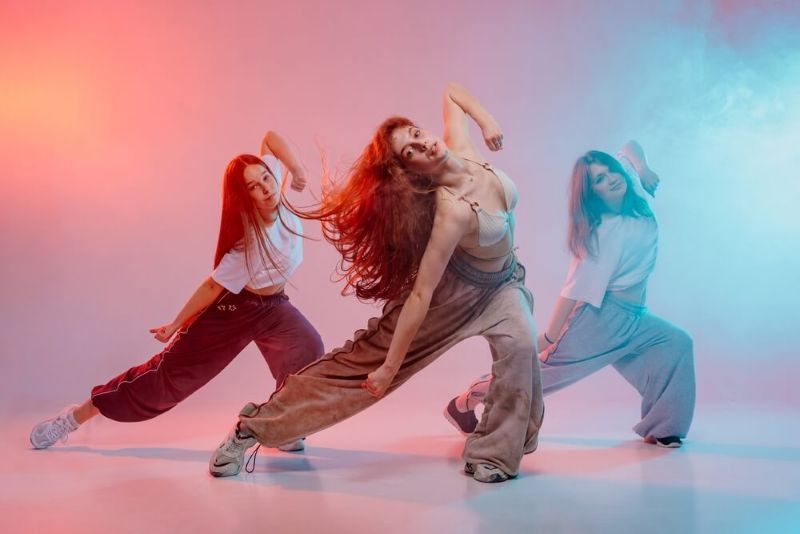
Dancers make it look easy, but every smooth move comes from a real grip on rhythm and timing. These two things shape how you move with the music, keep you in sync, and help you show emotion through your body. Whether you’re just learning your first steps or you’ve been dancing for years, really getting rhythm and timing changes how you dance.
This guide explains what rhythm and timing in dance actually mean, why they matter, and how you can improve at both with rhythm practice and awareness.
Rhythm is the pattern of sounds and silences you hear in music. When you dance, rhythm is how your body answers those patterns. It’s what helps you spot the beat, pick up on accents, and feel the flow of the music—then turn all that into movement.
When dancers talk about rhythm, they usually mean how their steps line up with the beat. Sometimes you hit the strong beats head-on. Other times, you fill in the spaces between them. Good rhythm lets you move with the music, not against it.
Don’t think rhythm is just about speed. Slow dances have rhythm, fast ones do too. What matters is how you space out the beats and how you choose to move through them.
Timing is connected to rhythm, but it’s all about when you move. It’s about hitting the right moments. You ask: When does this step start? When does it end? How long should I hold this move?
A dancer with solid timing knows exactly when to jump in and when to finish, following the music’s cues. Even simple choreography looks slick when your timing’s sharp. But if you’re off, even fancy steps can look awkward.
Timing gets even more important when you’re dancing with others. You have to match not just the music, but each other. Timing improvement makes the whole group look tight and makes a big impact on stage.
Honestly, dancers rarely separate rhythm and timing. They work together and become one key skill—call it rhythm and timing awareness. Rhythm gives you the music’s structure, and timing makes sure your moves fit inside it.
You might get the beat but still mess up timing if you’re too fast or too slow. Or you might move right on time, but miss the feel of the music if you don’t catch the rhythm. Real skill comes from mixing both so your movement feels real and musical.
These tips will help you:
Every style out there runs on rhythm and timing. They just show up in different ways. In ballet, timing keeps your balance and makes turns and jumps line up with the music. Hip-hop is all about rhythm—the groove, the bounce, those sharp accents. Latin and ballroom styles rely on rhythm for fast footwork and partner work.
Even in contemporary or freestyle, where things look loose or improvised, strong rhythm and timing improvement keep everything grounded.
Whatever style you pick, dancers who build this foundation learn faster and perform with way more confidence.
Honestly, rhythm isn’t just about moving your body—it starts with listening. Dancers have to train their ears to catch patterns in the music before they can turn those patterns into movement.
Most teachers kick things off by counting beats out loud. You’ll hear “1-2-3-4” a lot in the studio; it helps beginners figure out where the beats land. After a while, though, dancers stop relying on the numbers. They start to actually feel the rhythm, almost like it’s built in.
Basic exercises—clapping, tapping your feet, even just marking steps without going full-out—help connect what you hear with what you do. The more you do rhythm practice, the more your body just knows when the beat is coming. You’re not reacting late anymore; you’re anticipating it.
Good timing comes from controlling your movements. It’s knowing when to start, when to stop, how fast or slow to move, and how long to hold a pose.
Exercises where you freeze suddenly, pause, or balance for a count really teach you to respect the music’s length. Running through choreography at different speeds can make a big difference, too. Slow things down, and you notice details you’d normally miss; speed things up, and you really test your control and sharpness.
Eventually, you figure out how to adjust your timing without losing your balance or the clarity of your steps.
Every dancer hits roadblocks with rhythm and timing. It’s just part of learning. One big problem is rushing. Nerves kick in, and suddenly you’re ahead of the music. On the flip side, some dancers lag behind, and their movement looks heavy or disconnected.
Another thing—you can end up stuck on the counts, almost forgetting to listen to the actual music. Sure, counting beats helps, but you always need to let the music lead.
Recognizing these habits is key. Once you know what’s holding you back, you can actually do something about it.
Not all music is created equal when it comes to rhythm. Tracks with clear, strong beats are easier to follow. When the music gets more complex or layered, dancers have to listen more deeply.
Practicing with all kinds of music—slow, fast, simple, complicated—makes you more adaptable. Slow songs help you fine-tune your control. Fast ones sharpen your reactions.
It also helps to understand things like tempo control, accents, and phrasing. The more you get how music works, the easier it is to stay on beat and in sync.

Honestly, nothing beats regular rhythm practice. Even simple exercises, done often, make a real difference.
Over time, these habits boost your confidence and help you hit the music just right.
The audience might not know the technical terms, but they can tell when a dance feels right. Strong rhythm and timing make everything look and feel better. When a dancer moves with the music, the performance feels intentional and expressive. Even if you mess up a step, the flow of the piece covers it.
Professional dancers really lean on rhythm and timing—especially when things change unexpectedly on stage. It’s what keeps them cool and connected, no matter what happens.
Every dancer begins with rhythm and timing. You learn to listen, catch the beat, and move with it. That’s where good technique and real presence come from.
You need patience and lots of practice. But after a while, you move smoothly, you trust yourself more, and something clicks; you really feel the music. That’s when dance starts to flow. Suddenly, it’s not just steps. Its expression. It’s alive.
Absolutely. Most start with simple counting and basic exercises. Practice regularly, and it starts to feel natural.
The basics are there, but each style has its own spin. Learning different styles actually sharpens your overall sense of rhythm.
You need both. Counting gives you structure. Feeling the music brings out expression. Most dancers switch between both as they grow.
It depends on the person, but if you practice consistently for weeks or months, you’ll see real progress.
This content was created by AI