

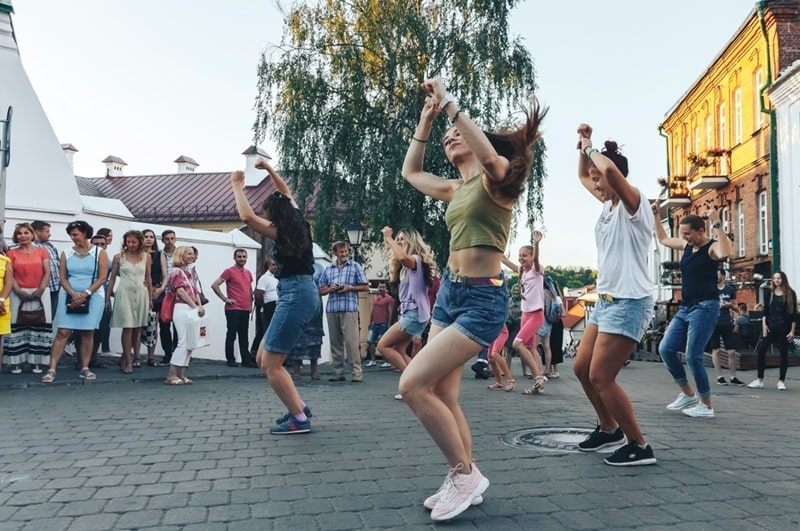
Street dance styles are an extension of energetic music and a way to express oneself as part of one's culture, as part of one's creativity, and as a part of one's Identity. The development of Street Dance Styles occurred within communities, cyphers, and public spaces and is now considered a worldwide cultural movements that not only influence music videos and dance competitions but also the fashion and overall culture of all societies. The individual's expression characterizes raw street dance styles through the use of rhythm and the ability to tell or relate a story to the audience.
Freestyle and urban street dance styles are both examples of street dance. Street Dance continues to be a current form of expression through which individuals connect through dance. The social dance movement is the basis for the creation and ongoing evolution of Street Dance. Groove-based dance moves are the foundation of most Street Dances and are utilized during competition in dance battles to promote creativity and confidence. A comprehensive guide to street dance styles is provided to help readers understand the origins, evolution, and ongoing relevance of the various forms of street dance.
The origins of Street Ballet are rooted in various locations, starting with an emphasis on freedom, Individuality, Expression, and Musical Interpretation That Diverges from the traditional confines of Dance Studios, as seen in Classical Dance. The Street Dancer also has its own style of performance, incorporating its own flavour into the dance, and every time they dance, it will be different from the last.
The Street Styles provide a way for people to express themselves creatively through Dance, thereby giving a voice to many who don't have one in today’s society. Through Social Dance Movements, Street Dancers use their body as a means to express their emotions, resist obstacles, celebrate events or milestones, or come together.
Street Dance Styles, over time, have influenced mainstream choreography while maintaining an Authentic Relationship with Freestyle Culture. Street dance styles are not a matter of perfection, but a need to connect to the beat, with the artist, and share your presence with others, both as dancers and audience members.
Street dance styles have evolved in response to changes in society, music, and interactions with people within their community. As new genres of funk, hip-hop, soul, and electronic music gained popularity, dancers began creating their own unique movements that reflected the sounds and energy of urban streets.
Freestyle street dances during the early days of street dancing focused on improvisation and individual rhythms. When dancers began performing together in parking lots, on streets, in homes, or at clubs (also known as cyphers) and competed against each other in performance battles, they pushed one another to create new styles and innovative dances.
Eventually, through a cycle of popularity, these styles of street dance combined into distinct urban dance forms but flowed from the same basic principles.
Currently, through cultural exchange and the sharing of information via the Internet and social networking sites, street dance forms are evolving quickly on an international level. The principles of freedom and groove, however, remain the same and continue to define street dance forms today.
The freestyle street dance forms are what make up the core of all the different styles of Street Dance. Freestyle is less about memorizing steps and more about listening to the music and then dancing to it instantly; it allows the dancer to hear, feel, and respond to the music through the use of their body, converting the sounds into movements.
Aside from freestyle street forms, the most important thing to remember when learning how to dance is that rhythm, timing, and musicality are more important than technical proficiency. Freestyle street forms enable dancers to express themselves authentically while adhering to the principles of groove-based dance. In addition to this, freestyle sessions can occur in cyphers, which are essentially gatherings of dancers that allow for the social aspect of connecting with each other through dance, rather than just performing individually.
Because freestyle street forms are so important, they help keep street dance styles alive, evolving, and authentic.
Urban Dance Styles Paparazzi was created when Urban Dance Styles began revealing themselves, via the medium of Dance Media (dance studios, the stage, etc.) It was through Urban Dance Styles that people all around the world were exposed to Freestyle Culture. Urban Dance Styles essentially combine a number of street dances that are rooted in freestyle and make them choreographed to produce something new.
Urban Dance Styles also give people all over the world access and exposure to the art of social dance; they bridge the gap between Underground Culture and Mainstream, while preserving the essence of Street Dance.
Urban Dance Styles have now become an integral part of the Flow of music associated with Hip-Hop Culture. The Process through which an Urban Dance Style is created can be as complex or straightforward as the style itself.
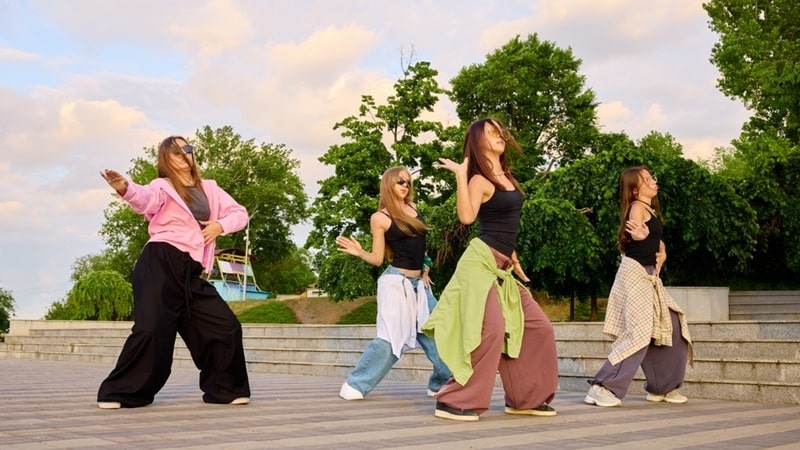
The foundation of street dance style is a groove-based dance. Groove is the rhythmic pulse or beat that connects the dancers to their music. If there is no groove, then the street dance style is no longer real.
All freestyle street styles require a groove in order to maintain their flow and connect to the music. A groove-based dance allows all of the dancers to not only listen and relax but also to move naturally, without having to force their movements into sharp techniques. This creates an organic and welcoming feel when participating in social dancing.
Street style dance is successful in its use of groove-based dance because it allows the dancers to develop a deeper relationship with the music.
The social dance action is a critical element of the various styles found in street dancing. All street dances were created with the idea they would be done with other people, whether at nightclubs, parties, on the street during a cypher, or at other community-based events; their purpose is for interaction - not the seeking of applause.
By dancing in these social contexts they allow dancers to communicate nonverbally. Dancers complete each other’s movements and respond to one another in an ongoing cycle; thus, there is this unspoken conversation among those dancing together (in a cypher). Through this shared kinetic energy, urban dancing remains alive and well, encompassing everyone who wants to participate in this vibrant form of expression.
Street Dance Styles can only be fully appreciated when experienced together.
One of the most enjoyable parts about dancing in street dance styles is the battle style. This style involves friendly but intense exchanges between dancers as they challenge each other by using their moves, creativity, and interpretation of the music for which they are dancing.
Street Dance Battle styles incorporate Freestyle Street Dance forms and Groove-based Dance forms, with an emphasis on improvisation, enabling dancers to react instantly to the music and their opponents. Dancing in this style helps dancers develop their overall skill set, become more confident when dancing, and create new forms of urban dance.
Instead of focusing on being the best or winning, the Battle Style emphasizes developing an individual's creative ability and showing respect to all participants, the primary values of street dance culture.
Modern entertainment has been heavily affected by various urban street dance genres. Urban styles have influenced how dance is used in media (e.g., commercials, television) as well as in live performances worldwide. Many traditional dance companies today incorporate freestyle street styles and groove-based dances into their choreographies.
Due to the rise of social media, social dance is now accessible to everyone around the world and can be experienced as a community. However, despite this increased exposure, authentic street dance originates from the community and is rooted in self-expression and freestyle movement.
Urban dance is continually evolving and influencing the way people perform, move, and interact with one another around the globe.
Developing self-expression is a significant part of learning street dance. Street dancers develop confidence by trusting their instincts while performing freestyle street-style dances. Creativity flourishes through an exploration of rhythm and individuality in groove-based dance styles. Street dance can help people communicate more effectively by allowing them to interact with others while dancing and battling. Through battling, they learn resilience and the ability to adapt. Learning street dance styles can be a means of personal development and growth.
Street dance styles allow dancers to express themselves creatively and develop their ability to connect with their music.
The future continues to shine brightly, developing and innovating in street dance styles. Dancers are adapting to the continued merging of cultures and the evolution of music, while simultaneously maintaining the foundation of freestyle styles and their original roots. Urban dance styles will continue to evolve, while also maintaining a foundation of groove, community, and authenticity as the essence of the styles moving forward.
With an increased awareness and appreciation of social dance styles and a resurgence of respect for battle styles, the future of these street dance styles will continue to have a lasting impact on future generations worldwide.
Street dance styles are a vital form of artistic expression, developed through a combination of rhythm, cultural influences, and community interaction. Urban dance styles, including freestyle forms of street dancing, groove-based dance styles, social dance movements, and competitive dance styles, provide opportunities for dancers to express their identity and emotions freely. Street dance styles are more than passing trends; they represent artistic movements of creativity, liberty, and connection that have existed for a long time.
The primary difference in street dance styles is that they are primarily freestyle-oriented, utilize groove-based dance, and are oriented toward social interaction rather than pre-existing choreography; therefore, street dance styles focus on individuality and connection to music.
Most definitely, freestyle street forms are beginner-friendly, as they promote natural body movement, encourage rhythm awareness, and allow for individual expression through freestyle dance without being limited to strict technical rules.
The importance of groove-based dance lies in its ability to create a connection between the dancer's movement and the music, making street dance styles feel both authentic expressions of the dancer and relaxed, yet rhythmically powerful.
Battle styles create an environment that encourages dancers to continue innovating and building their confidence in performing freestyles in a competitive yet respectful manner.
Street dance is a highly communal learning experience. As stated above, street dance is primarily learned through social dance movement; therefore, it is accessible to individuals who may not have access to a formal dance studio.
This content was created by AI