

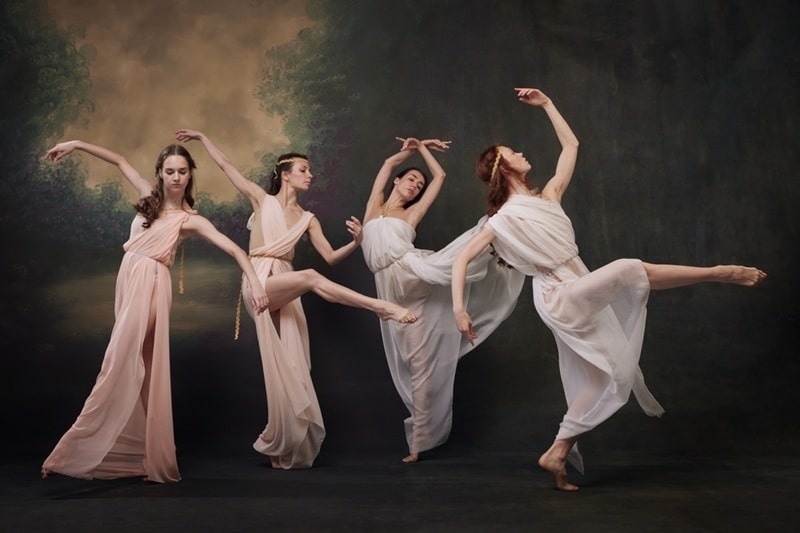
Classical dance looks hard at first. You hear special terms, you see exact steps, and you feel the long history behind it all - it feels like too much. However, when a teacher demonstrates the first simple moves one by one, the whole thing soon becomes clear. This guide does exactly that. It breaks every classical style into plain pieces, points out what makes each style different, and tells why people still care about them now.
At its core, classical dance is about discipline, clarity, and artistic control. These styles didn’t just pop up overnight. People spent centuries shaping them, passing them down, perfecting the details.
When you look at the styles side by side, the differences and similarities actually start to come into focus. Let’s see these classical dance styles:
If you’ve heard of any classical dance, it’s probably ballet. It started in Europe, grew into a full-blown stage art, and now everyone recognizes it for its focus on technical skill and form. Ballet foundations are all about alignment, balance, and moving with total control.
Getting good at ballet takes years. Dancers work hard for those perfect lines, seamless transitions, and spot-on timing. Honestly, most dance training begins with ballet basics—they teach you how to use your body well and stay safe while moving.
Ballet sticks to a set vocabulary of steps and positions. No matter where you study, those basics stay the same. That’s part of what makes ballet tough, but also what makes it so rewarding.
Bharatanatyam goes way back—one of the oldest classical dance forms still around. It’s a mix of sharp footwork, expressive hand gestures, and facial expressions, all used to tell stories pulled from mythology and devotion.
The strong stances and the insanely precise hand movements stand out. Every move means something—nothing’s random. It’s a style rooted in discipline, and it’s visually stunning.
Learning Bharatanatyam isn’t a quick process. Dancers have to nail the rhythm, posture, and the art of expressing emotion, all at the same time.
Kathak began as storytelling—dancers using their feet and flowing gestures to bring old tales to life. Over the years, it got faster, more intricate. Suddenly, you’ve got rapid spins, sharp, rhythmic footwork, and those moments when everything freezes for just a beat.
Music is a big deal in Kathak. Dancers wear ankle bells, and every move matches the beat. Timing and precision matter—if you’re off, everyone hears it. Kathak stands out for its energy and wild rhythms.
Even though it’s expressive and lively, Kathak still leans on traditional techniques. It’s proof that you can have structure and creativity in the same style.
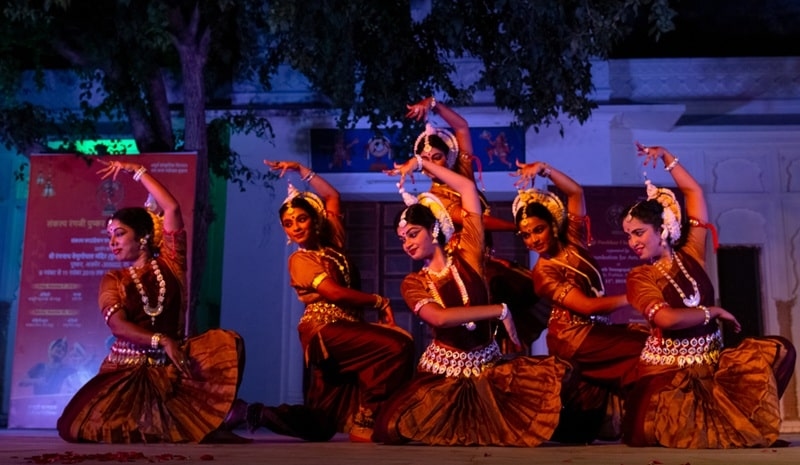
Odissi takes its cues from ancient temple art and sculptures. Instead of hard lines, dancers use soft curves and flowing transitions, almost like they’re carving shapes in the air.
This style zeroes in on controlled torso movement and graceful gestures. Poses aren’t random—they’re carefully planned out. Dancers need both flexibility and stability to pull it off.
People often call Odissi the most lyrical of the classical dances. It’s a mix of technical skill and a sort of quiet, spiritual storytelling.
Kuchipudi brings dance and drama together. Traditionally, it’s performed as a dance-drama, so dancers get to step into different characters while keeping the rhythm going.
Compared to some other forms, Kuchipudi moves faster and feels lighter on its feet. There are rules, for sure, but there’s also space for a little personal flair.
Kuchipudi shows that classical dance doesn’t have to be stiff. It can be disciplined and still feel lively and fun to watch.
Kathakali grabs your attention right away—those costumes, the makeup, and those wild, dramatic expressions. It’s pretty hard to look away. The dancers tell old epic stories, but they don’t use words. Instead, every gesture is precise and tightly controlled.
Movement here isn’t about being graceful. It’s intense and purposeful. Dancers train like athletes, building stamina and sharpness. They focus on strength and exactness, not soft or flowing moves. The classical training is strict, and you see it in every step.
Manipuri feels like the softest whisper in the world of dance—gentle, almost floating. Every step is smooth and unhurried, with dancers gliding in circles that look effortless. Even the footwork barely brushes the floor.
You will not see wide eyes or sweeping arm swings. The face stays calm, and every motion stays small. But the dance is hard. Each step lands on the exact beat, plus the dancer must stay inside the traditional techniques set centuries ago.
Because the stage stays still, the watcher feels the pull - a whisper reaches further than a shout.
Mohiniyattam moves with the calm of a slow-moving river—steady, graceful, and full of quiet confidence. Dancers sway gently, telling stories with every shift, every turn.
Nothing in Mohiniyattam is random. Every motion unfolds slowly, carefully, and with a structured movement, each one balanced and under control. It takes real skill to keep that smoothness going—lose focus, and the magic fades.
This style shows you don’t need over-the-top drama to feel something. The magic’s in the little things—the way a hand moves, a quiet pause, a slight tilt of the head.
Chinese classical dance is a mix of art, theater, and martial arts. It’s got power—big jumps, quick spins, broad sweeping arms. Sure, it’s athletic. But it’s the emotion behind every move that really sticks with you.
What really sets it apart is how dancers tie everything together from head to toe. Classical training covers everything—flexibility, balance, and a solid respect for tradition. Old techniques stay alive because each dancer carries them forward.
This dance style stretches across borders, reminding us that no matter where you train, discipline and expressive movement are always at the core.
Noh and Kabuki take dance and push it deep into the world of theater. Structured movements slow down, each one thick with meaning. You won’t find big, showy gestures here—just careful, symbolic moves.
Every step and gesture is mapped out in advance. Dancers represent another dimension of formal dance styles. Here, storytelling and ritual matter more than athletic tricks. Together, Noh and Kabuki reveal a quieter side of classical dance, where suggestion and structure hold all the power.
Classical dance isn’t just something old—it shapes everything that comes after. The discipline, focus, and body awareness you pick up stick with you, no matter what style you end up loving.
Once you understand the stories behind these dances, they no longer seem cold or stiff. Rather, you recognize their profundity, their origin, and the reason why people continue to return to them after all these years.
None of these dances needs to be seen as overly complicated or distant. Each of the styles mentioned has its own set of rules, but they all allow for the artist’s interpretation and storytelling. What unites them is a strong belief in discipline, clarity, and tradition.
Whether you are there as a spectator or taking the steps yourself, classical dance remains insightful, everlasting, and, quite unexpectedly, very human.
A classical dance style is one that is based on a codified system of movements, techniques, and methods of classical training that have been inherited from generation to generation.
It is certainly important to have a structure, but classical dance also allows the artist to use their creativity and to emotionally communicate themselves within the established techniques.
Usually, training takes several years as the dancers slowly develop their strength, coordination, and understanding of movement.
Indeed, the skills learned through classical dance can help one's balance, posture, and control, which are necessary for most other dance forms.
This content was created by AI