

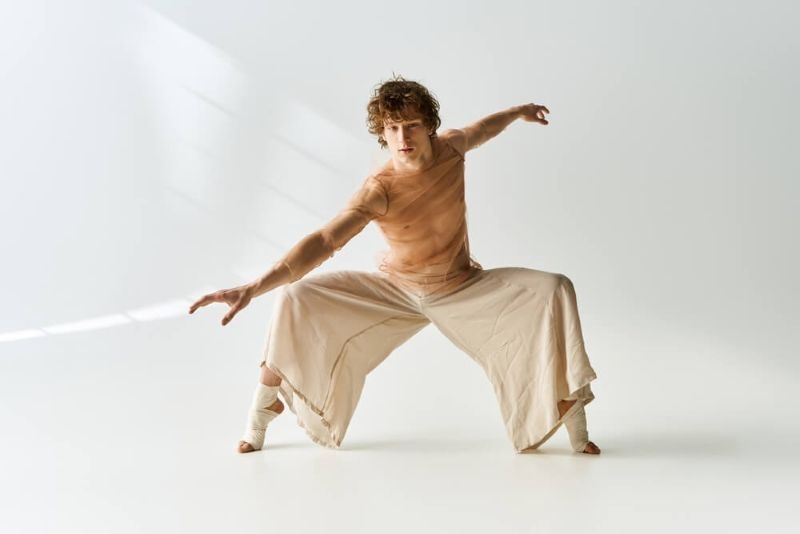
Some stories are told in paragraphs. Others are told in pauses, glances, and the way someone’s shoulders drop when they are tired of pretending they are fine. Dance lives in that second category. It does not ask for dialogue. It does not need subtitles. It just moves, and somehow the audience feels it anyway.
That is the quiet power of dance as storytelling. A body becomes a narrator. A gesture becomes a sentence. A turn or collapse becomes a plot twist. And the wild part is, most people can understand it even if they have never taken a single dance class.
So how does that work? How can movement communicate emotion with so much clarity? This blog breaks it down in a way that feels human, not academic. Because dance is not meant to be over-explained. It is meant to be felt.
Emotion is not just facial expression. People feel emotion in their nervous systems. Tightness in the chest. A heavy stomach. Restlessness. Relief. Dance mirrors those inner sensations outward.
A dancer can show anxiety by staying sharp, quick, and slightly off-balance. They can show grief by slowing down, sinking, and letting the weight of the body feel real. They can show joy by taking up space, bouncing, and moving with openness.
This is expressive movement at its core. It is not about looking pretty. It is about making an emotion visible.
If someone watching feels their throat tighten, or they suddenly want to clap, or they get goosebumps for no “logical” reason, that is the storytelling working.
A story needs a few basic ingredients: intention, change, and consequence. Dance can show all three. Intention shows up in the way a dancer reaches, leans, resists, or invites. Change appears through shifts in tempo, posture, and energy. Consequence shows up when the movement lands somewhere new, like a body that looks different at the end than it did at the start.
That is why narrative dance feels so satisfying. Even without literal characters or a clear “beginning, middle, end,” the body still takes the audience on a journey. It says, something happened. Someone wanted something. Something got in the way. Something changed.
And yes, that can be shown with nothing more than breath and timing.
Some movement cues are almost universal. They are built into how humans read each other.
The audience does not need to name these cues. They just register them. This is why storytelling through dance can cross language barriers. People do not need the same words to recognize a body that looks like it is pleading, celebrating, or breaking.
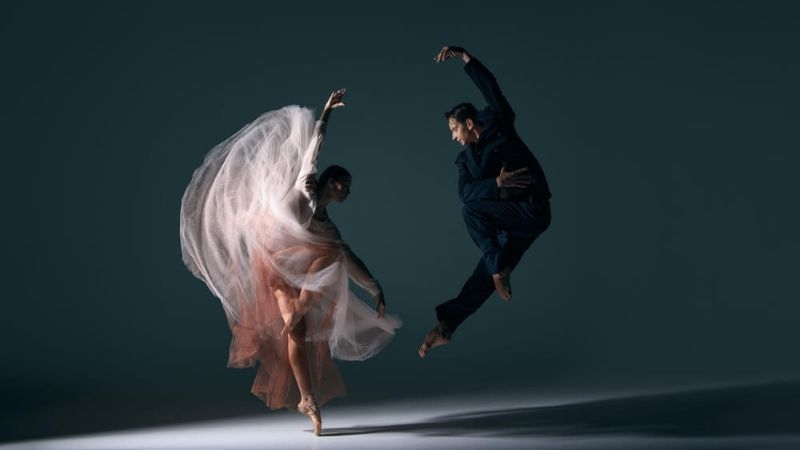
A dancer can do ten impressive turns and still tell no story. It happens. Technique alone does not equal meaning. Timing is what makes movement feel intentional. Think of a pause. A pause is not “nothing.” It is a choice. It makes the audience lean in. It creates tension. It can suggest memory, regret, or anticipation.
Or think of a sudden acceleration. When movement speeds up at the wrong moment, it can feel chaotic. When it speeds up at the right moment, it can feel like panic, urgency, desperation, excitement.
Storytelling lives in these choices. Not just what the dancer does, but when they do it.
Not every dance story is literal. Sometimes the story is symbolic, like a poem. A dancer might repeat a reaching gesture again and again, showing longing. Another dancer might block that reach, showing conflict. A lift might represent trust. A fall might represent betrayal. A circle might represent a cycle that keeps repeating.
This is symbolic choreography. It uses movement symbols to suggest ideas without spelling them out. What makes it so effective is that the audience gets to participate. They interpret. They connect it to their own lives. They fill in the emotional blanks with personal meaning. That is why the same dance can hit different people in different ways, and still feel true.
Music can guide emotion, but dance does not depend on it. Some of the most intense performances happen in silence, where the only soundtrack is breath, footfalls, and the room’s attention. Still, when music is present, it shapes storytelling by controlling pace and mood. A steady rhythm can suggest routine. A sudden drop can suggest rupture. A swelling melody can suggest release.
But the dancer still has to do the emotional work. If the movement does not match the music’s feeling, the audience feels the disconnect immediately. People might not know why it feels off. They just know.
That is why emotional dance is not about forcing tears or acting dramatic. It is about alignment. The movement, the energy, the timing, and the intention all point in the same emotional direction.
In many performances, the story is not one person’s emotion. It is about connection. Two dancers can show a relationship through distance, mirroring, and touch. They can show conflict through pushing, pulling, or refusing to meet each other’s gaze. They can show support through shared weight, careful timing, and the way one dancer catches the other without showing strain.
The audience reads these relational cues fast. It feels familiar because it is basically human interaction, just amplified and made physical.
This is where narrative dance becomes incredibly clear. A duet can feel like a whole relationship in four minutes. That is not exaggeration. Anyone who has watched a strong duet knows it.
Not everyone knows how to “watch dance.” They worry they are missing something. Here is the secret: they are not missing it. They are already feeling it. They just need to trust that.
Still, if someone wants a simple way to watch more actively, they can look for:
Even one of these can unlock meaning. And the more someone watches, the more their brain gets comfortable reading movement as language.
That is the heart of dance as storytelling. It trains audiences to listen with their eyes.
A dancer cannot fake emotion for long. The body gives it away. The audience can sense when movement is empty.
Performers build emotional truth through:
Sometimes it looks messy. That is okay. In fact, a little mess can make it more believable. Perfect lines are beautiful, but imperfect humanity is what makes people feel something.
The best performances are not flawless. They are honest.
Dance is not just entertainment. It is communication. It is a language made of weight, rhythm, timing, and choice. When someone watches dance closely, they start to notice how much emotion lives in the body. And they realize something kind of sweet: people have been telling stories without words forever. Dance just makes that truth visible.
Yes. Most audiences understand it intuitively through body language, timing, and emotion cues. Training just helps people notice details faster.
Narrative dance suggests characters, relationships, or a clear emotional arc. Abstract dance may focus more on shape, rhythm, or mood, but it can still carry meaning.
They can start with simple emotions like joy, fear, or calm and explore how posture, breath, and speed change the feeling. Recording and rewatching helps too.
This content was created by AI